Welcome
Published on 2026-02-20
AI Breakdown
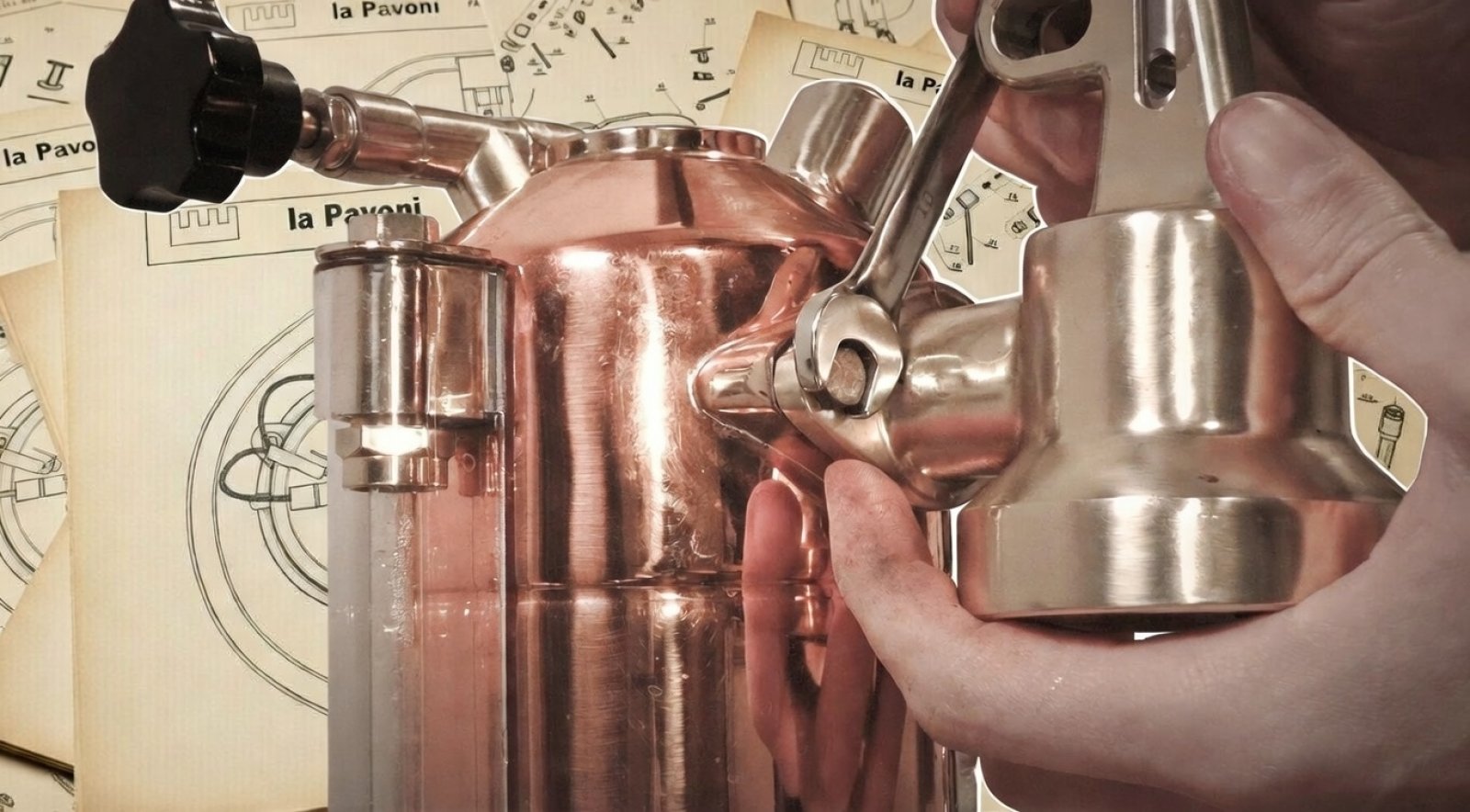
This refurbishment of a La Pavoni Professional began, as it should, with observation rather than immediate disassembly. The exterior condition was very good overall, with the only visible defect being a slightly bent steam wand. This is typically the result of shipping the machine without removing protruding components. Lever machines are mechanically simple, but they are not immune to careless transport.
The base was intact and uncracked, suggesting the machine had not been dropped or subjected to structural stress. Cosmetic health does not guarantee internal health, but visible neglect often correlates with deeper issues. In this case, the machine deserved a proper diagnostic run before any tools were picked up.
Initial Testing and Safety Valve Diagnosis
Before powering the machine, the boiler was filled with water. This is not optional. Energizing a dry heating element is one of the fastest ways to destroy it. Once powered, the machine exhibited excessive hissing and failed to build pressure. These symptoms pointed directly toward the safety valve.
This model uses a combined safety and vacuum-breaking valve. It releases excess pressure during operation and allows air to enter the boiler as pressure drops, preventing vacuum formation. The inner sealing element had likely degraded, allowing steam to escape continuously. Substituting a known working valve confirmed the diagnosis when the machine began building pressure normally.
This approach highlights a fundamental repair principle: isolate faults methodically. Swapping a suspected component with a verified working one is often more reliable than speculative disassembly.
Before removing the faulty valve, the boiler pressure was fully bled off. Even residual pressure can cause burns. The machine was also unplugged before draining water to prevent accidental dry heating.
Internal Inspection: Electrical and Thermal Considerations
Once opened, the machine revealed a detached thermostat. Poor contact between thermostat and boiler compromises temperature regulation. The mating surfaces were cleaned and a thin, even layer of thermal paste was applied before reseating the thermostat. Excess paste serves no purpose; it only creates mess and reduces thermal efficiency.
Another issue emerged: the pressostat pipe was in direct contact with a main electrical wire. Although the pipe does not reach extreme temperatures, sustained heat exposure and mechanical stress can degrade insulation and fatigue copper tubing. The solution was simple but essential—restore proper spacing and eliminate forced bending. Internal routing matters in machines that heat-cycle and vibrate.
When Not to Open the Boiler
No leaks were detected and internal inspection did not suggest severe scale buildup. In such cases, opening the boiler is unnecessary and potentially counterproductive. Every disassembly stresses threads and gaskets. Good servicing includes knowing when restraint is the correct decision.
Group Head Disassembly and Suction Pipe Failure
The lever assembly was removed in logical sequence: retaining rings, pins, roller, and finally the group head. Maintaining mechanical order reduces strain and prevents damage to tensioned parts.
During inspection, the suction pipe was found to be split in two locations. This defect explains inconsistent water delivery: instead of drawing water properly, the system was ingesting steam. A fractured suction pipe cannot be reliably repaired and must be replaced.
Piston Assembly, Grease, and Seal Condition
The piston assembly revealed excessive grease and worn seals. Over-lubrication is a common mistake. Grease does not improve performance when used excessively; instead, it migrates into the coffee path and accumulates debris. Only a minimal amount is required to reduce friction.
The cylinder bore felt rough due to light scale accumulation. Installing new seals into a rough cylinder surface leads to premature wear. The bore was gently smoothed to ensure the new seals would seat and operate correctly. Surface preparation directly determines seal longevity.
Although some gaskets were visibly flattened and near the end of their service life, not every component was replaced immediately. Functional evaluation matters. If seals remain elastic and leak-free, they can continue operating safely. Preventative replacement is valid, but so is condition-based maintenance.
Safety Valve Refurbishment Instead of Replacement
The original safety valve was cleaned and inspected. The rubber sealing surface showed wear on one side but remained flexible and crack-free. By flipping the seal and cleaning the O-ring, the valve could be restored to reliable operation without replacement. This approach emphasizes inspection over assumption. Not all aged components require immediate disposal.
Piston Depth Adjustment
Proper piston adjustment is critical in lever machines. The piston must travel as low as possible without contacting the shower screen. If contact occurs, mechanical wear increases and extraction consistency suffers. The adjustment involves two nuts with distinct roles: one sets the piston depth, and the other locks the position. Treating them interchangeably leads to inconsistent performance.
Reassembly and Thread Protection
When reinstalling the group head, the threads were tightened evenly and conservatively. Over-tightening brass threads risks permanent damage. Boiler threads are not forgiving. A snug, even fit is sufficient; mechanical force is not a substitute for precision.
The lever assembly was reinstalled with light lubrication on moving points. Excess grease attracts dust and accelerates wear rather than preventing it. Small retaining pins were handled carefully, as they are easily lost and surprisingly inconvenient to replace.
Final Testing and Broader Lessons
With reassembly complete, the boiler was filled before reconnecting power. The machine built pressure properly and operated without leaks. While some seals could have been replaced more proactively, the refurbishment demonstrated an important principle: servicing is not about replacing everything blindly. It is about understanding component condition, mechanical interaction, and system behavior.
Lever machines like the La Pavoni Professional reward mechanical reasoning. They consist of heat, pressure, leverage, and seals—nothing more mysterious than that. Diagnose before dismantling, avoid unnecessary intrusion into sealed systems, lubricate sparingly, protect threads, and respect thermal interfaces. Treated with that logic, these machines can remain functional for decades.